• Home
  • About Jill
  • Icky Bits
  • Totally Awesome Bits
  • Book Bits
  • For Writers Helpful Bits
  • Contact

Totally Awesome Tidbits

Taking It Slow...

8/14/2025

0 Comments

 
​China’s Three Gorges Dam towers over the Yangtze River holding back so much water in its reservoir that it redistributes the mass on our planet’s surface. When mass shifts toward the equator, the planet’s rotation slows. When mass moves toward the poles the rotation speeds up. Nasa has found the dam’s reservoir to slow Earth's rotation by 0.06 microseconds per day.
 
Picture
0 Comments

Commemorating the End of Slavery

6/19/2025

0 Comments

 
The French abolitionist, Edouard Laboulaye, envisioned a statue to commemorate the end of slavery in the United States—a gift to the American people to honor an end of servitude and oppression. He and the French sculptor, Frederic Auguste Bartholdi, drew up designs of Lady Liberty holding broken chains in her left hand and wearing broken shackles at her feet. The Americans financing the pedestal rejected their idea. They did not want the monument to acknowledge slavery in any way. Without the pedestal there would be no statue and so Laboulaye and Bartholdi were forced to comply. Bartholdi replaced the chains in Liberty’s hand with a book but peeking out from under the folds of her gown, in front of her right foot, a shackle lies, its last link broken.

​
Picture
0 Comments

Celebrate Earth Day with the Brown Pelican

4/23/2025

0 Comments

 
​Given the hardships the Brown Pelican has faced and survived, it makes a great mascot for Earth Day, proving the fight for our environment matters. When the Brown Pelican became the official state bird of Louisiana in 1966, not one breeding pelican was left in all of Louisiana. 
            The first threat that nearly decimated the Brown Pelican population involved, of all things, ladies’ hats. In the late 1800’s, decorating hats with feathers was the rage. It started with a feather or two, then a wing, and then entire birds stuffed and wired to perch on hats as if in flight. On occasion twigs, leaves, and dead rodents were added for realism. One ornithologist, a person who studies birds, estimated that five million birds were massacred every year for their feathers. Pure white feathers were worth more than gold. Luckily for the pelican and the 66 other species of birds at risk of extinction, a group of women organized a movement to save the birds. They were the first conservation group in the United States, and their efforts led to the creation of the Audubon Society. Resulting laws protected birds from hunters and saved the Brown Pelican.
Until--
A new threat nearly wiped out the Brown Pelican in the mid-1900’s. Pesticides used by farmers were draining into the Mississippi River, poisoning the fish pelicans fed on. If the pesticides didn’t outright kill the pelicans—which it did in devastating numbers—the poison caused the pelicans to lay soft, brittle eggs that broke when the birds sat on them. Once the deadly pesticides were banned, the pelican population slowly began to recover.
Until— 
In 2010, one year after Brown Pelicans were removed from the endangered species list, their rookeries, or nesting places, were ground zero for the largest marine oil spill to date when the Deepwater Horizon oil rig exploded in the Gulf of Mexico. The oil fouled the rookeries and coated the pelicans. Diving for fish through the oil slick saturated their feathers. No longer buoyant, many pelicans drowned. Preening their feathers to rid themselves of the toxic goo led to organ failure. Wildlife first-responders managed to rescue 582 Brown Pelicans. And with those rescues, the population began to increase.
Until--
Climate change.
Louisiana is losing a football field of land every 60 minutes. Rising sea levels are flooding the rookeries, submerging whole islands. There are few places in the world losing land faster than Louisiana. Money from Deepwater Horizon’s legal settlement is helping to restore some of the islands, but the battle is uphill. In five years, the Brown Pelican may be facing extinction again when their Louisiana habitat is completely underwater. Who will rescue them then? 
We will! Earth Day proves there are still millions of us who care about the future of the planet. Make your voice heard!


0 Comments

Women's History Month Celebrating Activist Helen Keller

3/25/2025

0 Comments

 
     Helen Keller may be most known for overcoming extraordinary challenges to become the first blind and deaf person to earn a college diploma in the United States, graduating cum laude from Radcliffe. But Keller’s most important work was her political activism so radical she was under FBI surveillance her entire life. 
     Keller was a suffragist, participating in marches and protests fighting for women’s rights. She wrote essays supporting the legalization of birth control and abortion. In 1909, Keller joined the Socialist Party, advocating for worker’s rights. Sickened by the inhumane treatment of Black citizens, Keller became an ardent supporter of the newly formed National Association for the Advancement of Colored People (NAACP) co-founded by a lifelong friend. She traversed the country spotlighting the brutal and terrorizing continuation of lynching and other heinous crimes against Blacks. 
     Her work in opposition to racial injustice and inequality led her to understand that marginalized people needed protection from government oppression and, along with a handful of other socialists in 1920, she established the American Civil Liberties Union (ACLU). 
Championing the rights of people with disabilities took her to 39 countries where she met with government leaders—from kings and queens to presidents and prime ministers. Her tireless work to fight injustice was recognized by a nomination for a Nobel Peace Prize. 


     Reporters once asked which affliction was the most difficult to withstand—deafness, dumbness, or blindness. 
     She answered, “None.” 
     “What then?” they asked. 
     “Boneheadedness.”
 
 
     One of Helen Keller’s closest and longest relationships was with Alexander Graham Bell. Bell’s mother and wife were also deaf. Dedicating his life to improving lives of the hearing impaired, he taught the deaf how to speak using a method his father had invented called Visible Speech. When Keller was six years old, Bell steered her family toward the Parkin’s School of the Blind, which in turn led Keller to her teacher Anne Sullivan.  After Keller graduated from Radcliffe, Bell toured the world with her. In 1903, Keller dedicated her autobiography to Bell, writing: “To Alexander Graham Bell who has taught the deaf to speak and enabled the listening ear to hear.”
0 Comments

Celebrate Black History Month with the Fisk Jubilee Singers

2/1/2025

0 Comments

 
​Gospel, jazz, blues, hip-hop, and rock’n roll all have a common ancestor—the “slave songs” sung by African Americans. The world might have been robbed of this rich musical heritage and all that grew out of it, had it not been for the Fisk Jubilee Singers.
            In 1866 one year after the end of the Civil War, Fisk University opened in Nashville—the first American university to offer a college education to people of color. It struggled financially. Five years in, it was on the brink of having to close its doors. In a last-ditch effort to raise money and save the university, a music professor formed a choir to perform on tour. He felt confident those who had been abolitionists along the former underground railroad route would have sympathy and donate to their cause.
            At first the choir, many of them former slaves, met with venomous racism. Innkeepers refused to rent them rooms. People boycotted their performances. They were making so little money they couldn’t afford to buy coats to keep warm in the cold northern states. But they persisted, and little by little their audiences grew until they were performing to sold-out crowds. Mark Twain said, “I am expecting to hear the Jubilee Singers to-night, for the fifth time. The reason it is not the fiftieth is because I have not had fifty opportunities.” President Grant invited them to perform at the White House. On world tour, they performed for Queen Victoria. She was so moved by their performance she commissioned their portrait and then gave it to Fisk University as a gift.
​           The Fisk Jubilee Singers broke racial barriers. When George Pullman discovered the choir had been denied berths on trains, he integrated his entire fleet. Owners of hotels and inns and boarding houses were inspired to integrate—then public schools. Yet arguably the choir’s greatest legacy is saving slave spirituals from being lost and forgotten. 

​
Picture
​The portrait commissioned by Queen Victoria of the Fisk Jubilee Singers hangs in Jubilee Hall, a building built with money the choir earned, constructed out of stone so the Klu Klux Klan could not burn it down. Today’s Fisk Jubilee Singers rehearse beneath the portrait. 
 
0 Comments

Pluto

6/17/2024

0 Comments

 
Pluto is smaller than the United States!
​
Picture
0 Comments

Now that's old...

6/28/2022

0 Comments

 
California's regal coastal redwoods were around before Julius Caesar ruled Rome!

Picture
0 Comments

Time...

5/22/2022

0 Comments

 
Time is just a coordinate.            POW!
0 Comments

The Sun Is Not On Fire.

4/5/2022

0 Comments

 
Picture
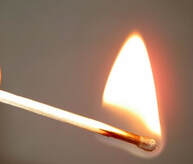
​The sun is not on fire. There is no oxygen in space and fire—or combustion--requires oxygen. The sun does not burn, it fuses. The sun’s glow is from nuclear fusion taking place at its core. Every second the sun converts 700 million tons of hydrogen into 695 million tons of helium. And those flares that look like flames shooting off the surface of the sun? They are powerful bursts of radiation created by solar quakes and eruptions. All that violent action makes a lot of sound waves. All that heat makes the sound waves move super fast. The waves smash into one another vibrating the sun like a guitar string. The sun is 100 times louder than a rock concert. It’s a good thing sound can’t travel through space, or we wouldn’t be able to hear anything else. What? What did you say? I can’t hear you over the noisy sun! 
NASA video of solar flares:
https://www.youtube.com/watch?v=E8csg9YSMkk
 
0 Comments

Checkmate

10/3/2021

0 Comments

 
Picture
Photo Credit
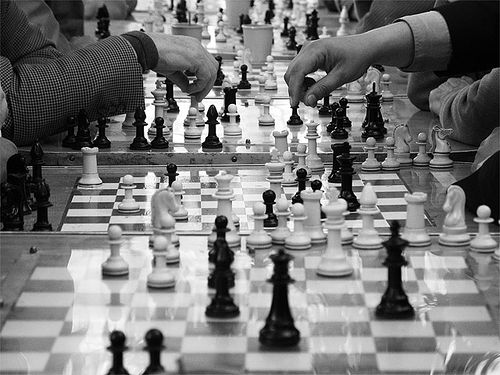
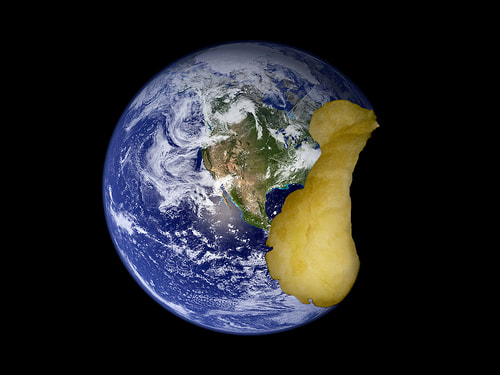
​I love playing chess. I’m not very good at it, but the game never bores me. I think I found a clue as to why. There are many more possible chess games than there are atoms in the observable universe. That’s a lot of games. Mathematicians have a value for the number of possible games (of course we do). It’s called the Shannon Number—somewhere between 10 to the 111th and 10 to the 123rd (which is a notably humongous range.) There are 10 to the 81st atoms in the observable universe—but then again, if you took away all the space between the atoms, they would fit inside an apple…so there’s that.
Picture
Photo Credit
0 Comments
<<Previous

    Archives

    August 2025
    June 2025
    April 2025
    March 2025
    February 2025
    June 2024
    June 2022
    May 2022
    April 2022
    October 2021
    September 2021

    RSS Feed

  • Home
  • About Jill
  • Icky Bits
  • Totally Awesome Bits
  • Book Bits
  • For Writers Helpful Bits
  • Contact